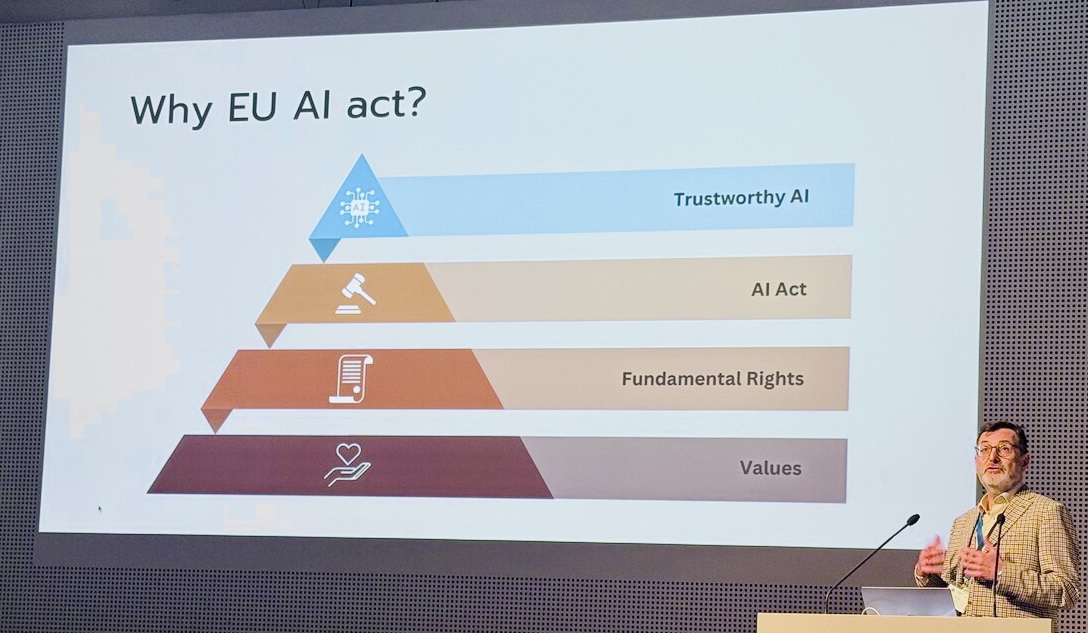

Across the public sector, digital transformation is accelerating. Cities and public institutions are adopting digital platforms, data-driven services, and automated decision-support systems to improve efficiency and accessibility. At the same time, expectations around fairness, transparency, accountability, and inclusion are rising. For public-sector leaders, this creates a central challenge: how to modernize public services while maintaining trust and democratic legitimacy.
While many public organizations articulate strong ethical principles in strategies and policy documents, translating these values into concrete design and implementation decisions remains difficult. Ethical commitments often remain abstract, applied inconsistently across departments, or addressed late in the development process—when changes are costly and scrutiny is already high. This blog post explores how Value-Based Engineering (VBE) can help address this challenge in practice, drawing on the City of Vienna’s experience applying VBE to its digital services as part of its broader Digital Agenda 2030.
The Public-Sector Challenge: Turning Values into Practice
Unlike private companies, public institutions are accountable not only to users but to citizens, regulators, courts, and political bodies. Digital systems must therefore withstand scrutiny over time and across contexts. Questions such as Who is affected?, How are decisions made?, and How can they be explained or challenged? are not theoretical – they are operational requirements.
This challenge is especially visible in cities, where digital platforms increasingly mediate access to essential services. Ensuring equal access, protecting personal data, and maintaining transparency requires more than technical functionality. It requires a structured way to embed public values into system design from the outset.
Vienna’s Human-Centered Digital Transformation
The City of Vienna offers a concrete example of how this challenge can be addressed. Long recognized as a pioneer of Digital Humanism, Vienna has committed to placing human values, rights, and well-being at the center of its digital transformation. This commitment is formalized in the Digital Agenda 2030, which emphasizes ethical, inclusive, and sustainable digital development as a responsibility of government.
Rather than treating ethics as a separate policy layer, Vienna seeks to operationalize values such as fairness, transparency, accessibility, and sustainability within its digital services. A flagship example is the Mein Wien platform, which provides citizens with access to a wide range of municipal services. Designing such a platform raises critical questions shared by many cities:
- How can digital services ensure equal access for diverse populations?
- What does transparency mean when decisions are supported by algorithms?
- How can long-term social and environmental sustainability be designed into public systems?
Applying Value-Based Engineering in Practice
To address these questions systematically, the City of Vienna conducted a Value-Based Engineering (VBE) workshop focused on the Mein Wien platform. VBE, grounded in the IEEE 7000 standard, provides a structured methodology for translating stakeholder values into concrete engineering and governance requirements.
During the workshop, representatives from multiple city departments worked through key steps of the VBE process: identifying stakeholders, clarifying relevant public values, and mapping those values to design choices and organizational practices. Guided by experienced VBE coaches, participants explored how abstract principles could be operationalized in architecture, interfaces, data practices, and governance structures.
The workshop enabled participants to:
- Make implicit public values explicit and shared across teams
- Translate values into actionable design and decision criteria
- Navigate trade-offs between competing public interests, such as transparency and privacy
- Document ethical decisions and rationales to support accountability and trust
Crucially, the process strengthened institutional capacity. Rather than producing one-off recommendations, it equipped teams with a repeatable approach that can be applied across projects and departments.
A Transferable Model for the Public Sector
Vienna’s experience highlights a broader lesson for public-sector organizations: ethical digital transformation requires more than principles – it requires engineering discipline and governance structures that embed values by design. Value-Based Engineering provides a practical pathway to bridge the gap between public values and technical implementation, helping institutions deliver digital services that are not only efficient but also trustworthy and defensible.